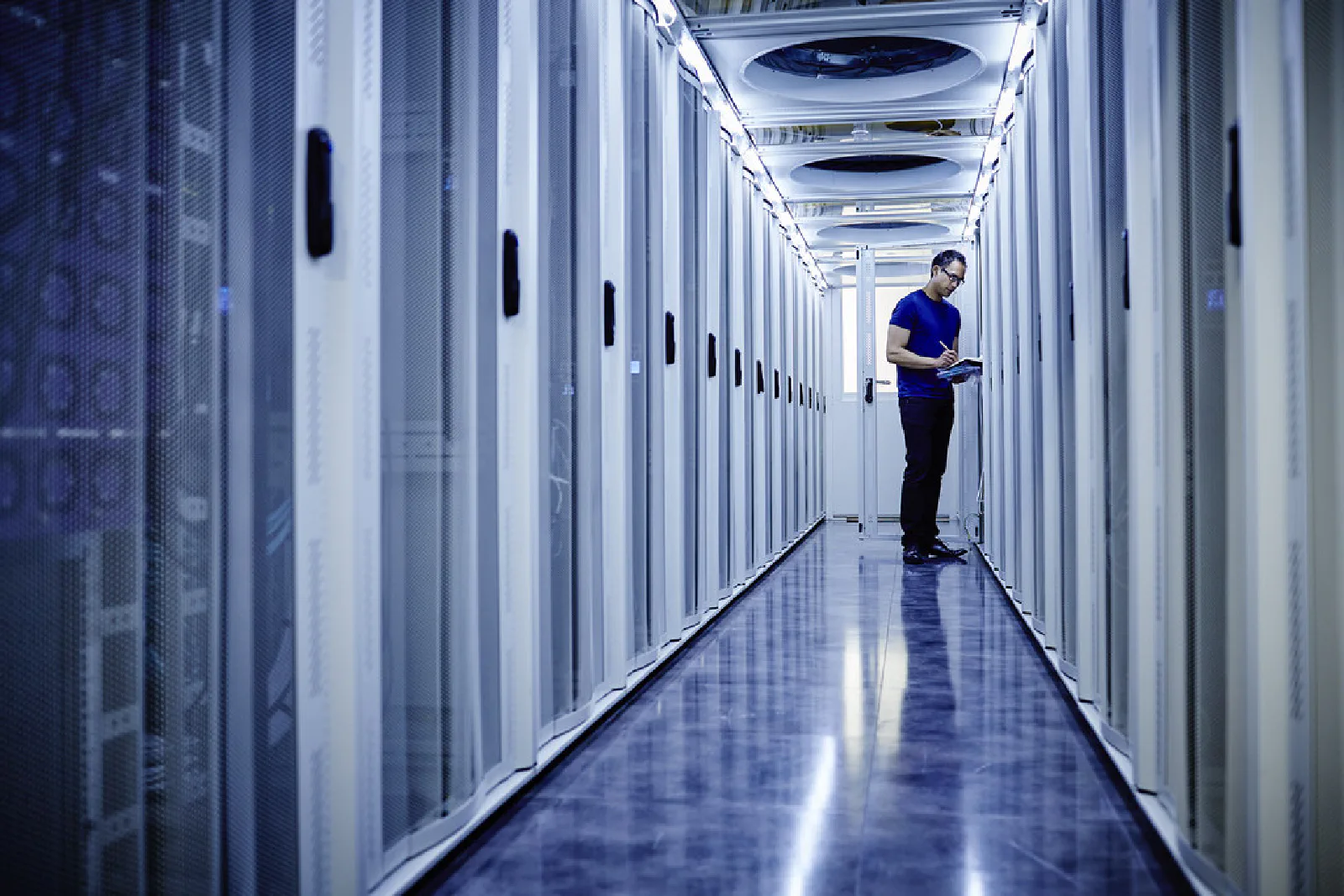
Last week, the Tasmanian Greens announced they’ll move for an urgent parliamentary inquiry into the AI data centres going up across the north of the state. I think this is a very good idea. These projects appear to have been approved without any specific regulations or parliamentary oversight, and the public has barely had the chance to have a say. The announcement also put a new number on the record: in Budget Estimates, under Greens questioning, Energy Minister Nick Duigan confirmed Firmus plans to draw 400 to 500 MW across two or three “AI factory” sites, which is more than Bell Bay Aluminium’s 335 MW, currently the state’s single biggest power user.
A lot of people seem convinced Tasmania can become some kind of “AI Island”. We’ve supposedly got cheap hydro power, and the world apparently wants somewhere clean to run artificial intelligence. So we sell ours as “green compute” and the investment rolls in. That’s the theory, anyway. The Premier loves it, and so does a Singaporean startup called Firmus.
One of the core problem with this is the power. We don’t uniformly have a surplus to sell. Last year we were importing electricity from Victoria just to keep our own lights on, and the government wants to hand about a sixth of the grid to a handful of foreign-owned sheds full of NVIDIA chips. What we get back is a few dozen permanent jobs, a stack of environmental claims nobody has audited, a great deal of noise, and a contract we’re not allowed to read. It’s a bad deal, and it’s being pushed and pushed and pushed.
And to be clear, this isn’t anti-AI. You can use AI, like it, even love it, and still think this plan is a bad deal for Tasmania. You can love electronics and still not want a lithium mine next door. Whether you’re for or against it barely matters here. What matters is whether handing a foreign company a big slice of our grid, water and goodwill is worth it for the people who actually live here. There are better ways to get a few dozen jobs, and most don’t rely on a huge chunk of our power grid, and lots of concerning impacts on things.
The spare power isn’t there
Let’s start with the Regulator’s own numbers. In the 2024-25 water year Tasmania imported 1,983 GWh from the mainland and exported just 433, a net 1,550 GWh flowing into the state, most of it made by burning brown coal and gas in Victoria. We were a net importer across Basslink for nearly every month of the year, hydro inflows were the third-lowest on record since we joined the national market, and we ran the gas plant to get through. The renewable surplus this whole scheme leans on wasn’t actually there. As one local writer put it, the grid is “tight. Not abundant and infinite. Tight.”
If we weigh that against the demand… well, it doesn’t look great. Firmus’s Launceston factory is contracted for 104 megawatts on its own, about what the entire Boyer paper mill draws, in a single building. Across its three sites at St Leonards, Bell Bay and Wesley Vale, Firmus is heading for 400 to 500 MW. The reporting on the Bell Bay plans put the combined Launceston-and-Bell-Bay figure at close to 15 per cent of everything the Tasmanian grid can supply, and even that only holds “unless new wind, solar or hydro generation is built.”
So this amazing AI data centre plan relies on a fleet of new generators that don’t exist yet, on a timeline nobody has guaranteed, which may or may not happen. Until they’re built, every megawatt that goes to a data centre is one taken off someone else.
Taken from the industries already in the queue
There’s already a queue for that power, too. Firmus was waved through for its 104 megawatts, but our own industry (industry that’s already here, doing useful things) has been told to wait. The Boyer paper mill, which employs around 300 people in Tasmania, has been trying to get off its coal-fired boiler. The conversion needs an extra 45 to 60 megawatts, and Hydro Tasmania told the mill the capacity wasn’t there.
So the rules bend for the right foreign investor, making something of spurious value, but not for an existing industry that already has some form of demonstrable value and jobs. Greens leader Dr Rosalie Woodruff put the contradiction to Parliament directly:
“How is it possible that established industries in Tasmania aren’t able to get additional power generation, but a Singaporean company who walks in and suggests a $2-billion investment are able to whistle up what they need?” — House of Assembly, 25 March 2026
Every gigawatt-hour we sign over to AI is one that can’t get Boyer off coal, expand Bell Bay Aluminium, or electrify our homes and cars and bring people’s bills down along the way. We’d be rationing power to Tasmanian workers and households so a foreign company can rent out AI compute to whoever pays the most for it. To say nothing of the supposed benefits of AI, which look shakier by the month.
Not many jobs
Unless one of these places hands something to locals directly, the whole case for it comes down to jobs and economic growth. And it doesn’t hand us anything direct: no free or faster AI, no product, nothing at the gate. So weigh what it asks for against what it gives back. It wants space, up to a sixth of the grid, water, money, new laws, a long list of environmental and neighbourhood effects, and a big slice of our limited links to the mainland, for both power and internet.
What comes back is jobs, and not many. The boosters lead with the big figures: up to 100 jobs, $2.1 billion. Wow! But strip out the construction crews, who pack up once the building’s done, and look at who runs the place day to day. Firmus’s own planning documents put Launceston at about 30 staff around the clock, and the bigger Bell Bay site at roughly 70 in the day plus 25 on each of the evening and night shifts. Call it 150-odd permanent jobs, for 400 to 500 MW of the grid.
The honest way to weigh that is jobs per megawatt, and on that measure a data centre is about the worst deal going. Bell Bay Aluminium employs close to 500 people on 335 MW. The Boyer paper mill employs around 300 on roughly what Firmus’s Launceston site draws on its own. That’s something like five times as many jobs per megawatt at the smelter as at Firmus, and closer to ten at the mill. Firmus wants about as much power as the two of them combined, to employ a fraction of the people.
It doesn’t seed anything else, either. A smelter or a mill buys from local suppliers and anchors a supply chain; Bell Bay Aluminium alone supports almost 300 local businesses. A data centre is a sealed box of imported hardware. It doesn’t start a new industry or feed an existing one, so nothing much grows up around it. And there’s no guarantee even the few jobs go to locals: Firmus is a Singapore-based company running a highly specialised operation, and the open question, as the Tasmanian Times put it, is whether Tasmania ends up just “a provider of green energy and a handful of jobs”. There are much cheaper ways to make a few dozen jobs.
The claim that data centres transform local economies doesn’t hold up either. The most careful study going, from Brookings, found the first big data centre in a county lifts private employment by 4 to 5 per cent over five or six years, a real effect but a modest one, and that industry’s own estimates overstate it threefold. The honest number gets tripled before it reaches a press release.
These places are built to run on a skeleton crew. That’d be fine if we were drowning in spare power, but we’re importing it.
The green credentials are unverified
The environmental case is a non-trivial portion of the sales pitch, and almost none of it has been independently checked. Firmus says the Launceston site will use about as much water as 50 households a year, “up to 99% less than a typical data centre”, running dry cooling except on the ten hottest days. That figure’s on the company’s own FAQ page, describing a building that doesn’t really exist yet. Its Bell Bay application, meanwhile, concedes up to 22,000 kilolitres of cooling water in a peak year, “most of which would be lost to evaporation”, and lists diesel generators on site for backup.
There’s definitely some real carbon concerns, there. Add hundreds of megawatts of demand in a dry year while you’re importing fossil power from Victoria, and that power doesn’t turn up clean. At the margin you’re pulling Victorian coal across the cable and calling it green. “Clean AI” only earns the label once the matching renewables are built, and they don’t seem like they’re anywhere near it.
Investors have their doubts too. One analyst flagged Firmus spruiking a Power Usage Effectiveness of 1.03, close to the best in the world if it stands up. It’s self-reported, and nobody independent has checked it.
Spare a thought for the neighbours
Wherever these things get built near people, the people tend to end up hating them. Data centres run hot and loud around the clock: banks of cooling fans, chillers and backup generators that, as the US Environmental and Energy Study Institute puts it, throw off high- and low-frequency noise that “can be heard for hundreds of feet”. The low hum is the nasty part. It never stops. Residents near these sites report wrecked sleep and falling property values, there’s a wave of noise-nuisance lawsuits underway (including one in West Michigan), and a quiet suburb in Chandler, Arizona spent the better part of a decade fighting one. Then there’s the air: VCU researchers found Northern Virginia’s data-centre diesel generators now rival a power plant for emissions.
To be fair to Firmus, siting matters, and at Bell Bay it works in their favour. The George Town campus goes on the old Gunns pulp-mill land, which Firmus rightly calls “well separated from homes and residential areas”. It’s a heavy-industrial zone, and a server shed is hardly the worst neighbour that stretch of the Tamar has had. The full suburban horror story probably doesn’t apply there.
St Leonards is a different matter. That one sits in Launceston’s eastern suburbs, close enough that the council bolted noise-attenuation conditions onto the permit, and locals had already raised concerns about cooling-system chemicals. The Bell Bay plans, industrial zone or not, still list diesel generators on site. None of it is a deal-breaker on its own. But with no Tasmania-specific noise or air rules for these places, residents are left trusting the standard council conditions to hold the line, the same kind of conditions that, everywhere else, have ended in court.
Higher bills, including here
Modelling consistently indicates data centres will push up local power bills. Work reported by The New Daily and the Climate Council has data-centre demand pushing household power prices up by as much as 26 per cent within a decade, with wholesale prices in New South Wales up 26 per cent and Victoria 23 per cent by 2035 if the build keeps outrunning new renewable supply, which it is. This is on top of existing regular increases, which we’re already subject to.
And we don’t dodge it by hosting only a little of the load! The Clean Energy Finance Corporation’s Getting the balance right report found that even where barely any data-centre demand is added here, “some price impacts are still expected as their generation is exported to other states to meet demand.” We’re wired into a national market, so the pressure reaches Tasmanian households whether the sheds sit in Launceston or western Sydney.
Hydro Tasmania, the public company that’s meant to be banking all this, saw its after-tax profit fall 96 per cent last year, from $193.7 million to $7.5 million (the figures worked out by independent MLC Ruth Forrest). That’s the outfit we’re trusting to give our power away cheaply and somehow still turn a profit for the people who own it, which is us.
Ireland already ran this experiment
For a preview of letting the data centres in first and sorting the grid out later, we can look at Ireland, where they now eat 22% of all metered electricity, up from 5% in 2015, and are forecast to hit 30 per cent within five years. The grid operator has warned plainly about blackout risk, and the regulator was eventually forced to put strict conditions on new connections: bring your own generation, match your demand with renewables, and prove you won’t destabilise the local grid.
The United States is going the same way. Data centres drove 40% of the cost of PJM’s most recent capacity auction, and communities there have blocked or delayed around $64 billion of projects over the same fights. Greenpeace has called for an outright moratorium on new AI facilities.
There’s also the question of how these loads behave, not just how big they are. A single giant data-centre cluster can destabilise the grid around it. In Northern Virginia last summer, one equipment fault knocked about 60 data centres, roughly 1,500 MW of load, off the grid at the same instant, and the network narrowly avoided power cuts (DCD). It’s a serious enough problem that the US Department of Energy is now monitoring the “oscillations” these big loads can set off, and a Bloomberg analysis of 770,000 home sensors found power quality is measurably worse near data-centre clusters, with “bad harmonics” that can damage household appliances.
Everywhere this runs at scale, the rules show up after the strain, the blackout warnings and the price rises, not before. We’ve got the rare luxury of seeing it coming, and we’re lining up to make the same mistake anyway. There might be time to stop this, though. Perhaps?
A deal we can’t see
The most damning part is how little of this is public. The Firmus terms are commercial-in-confidence, so we don’t know what was offered in incentives, tariffs or concessions, there’s no published figure for what it adds to the state economy, and none for council rates. We’re told to trust the government and the company, and given no reason to.
It was opaque enough that the lower house unanimously passed a motion ordering the government to disclose its commitments to Firmus and the water-use agreement. Greens MP Tabatha Badger’s verdict was blunt: “There has been no transparency whatsoever.” She’s warned the company is on track to become the state’s single largest power consumer within four years, “a frightening prospect when Tasmania has no planning guard rails in place”.
So we’ve got a foreign company on track to be our biggest electricity user, on a tight grid, with no specific planning rules and confidential terms. The Point called it a “bet-the-grid proposition, made without any meaningful public debate”, which is about right.
There’s the company itself, too. Firmus is racing toward an ASX float reportedly pitched with no escrow or lock-up on early investors’ shares, the usual safeguard against founders and seed backers dumping stock the moment it lists. The profits, if they come, sail offshore to its owners and to NVIDIA. The power bill and the risk stay with us. Yay.
The case for it, and why it falls short
Despite my own misgivings, the other side deserves a fair hearing: Firmus is, apparently, risking its own capital, with no subsidy we’ve been shown (yet). The Bell Bay site reuses the derelict Gunns pulp-mill land instead of clearing a paddock. And co-founder Oliver Curtis insists the load will be flexible, “a grid asset, not grid strain.” If that flexibility is real and written into the contract, and if the projects genuinely pull new wind and solar, the 1,500 MW Marinus Link and the “Battery of the Nation” pumped hydro into being, the balance could shift.
That’s a lot of conditions, and ifs, and the timing gives the game away. Marinus and the Lake Cethana pumped hydro aren’t due until roughly 2028 to 2030. The Firmus load switches on in August 2026. So we’re being asked to take on the demand now and hope the supply, the jobs and the green credentials all turn up later, on the word of a company that’s busy lining up to sell itself on the sharemarket.
It’s the opposite of Brand Tasmania
This matters less than the power or the bills, but it’s worth saying out loud: the whole plan is wildly off-brand. Tasmania has spent years and real public money building a place brand that’s the precise opposite of a hyperscale AI shed. Brand Tasmania, an actual statutory authority, sells the state as “the quiet pursuit of the extraordinary”. Its own brand essence describes Tasmanians as “humble, quietly confident, and cool while the rest of the world is increasingly loud and hot”, focused on “better, not more”, on “quality taking precedence over quantity”, and on “our choice to protect the wilderness and our environment”.
A 400-to-500 MW AI factory is the opposite of nearly every word of that. Data centres are loud and hot, in the most literal sense. They’re “more, not better” poured into a tin shed: more compute, more power, more water, racked up as fast as the chips arrive. We sell ourselves on being quiet and low-impact, then line up to hand the grid to the loudest, most power-hungry industry going. You couldn’t dream up something more off-brand if you tried.
And it goes beyond image. AI itself can be interesting, but it cuts against markets Tasmania has spent decades building, especially the arts, where the value is precisely that a human made the thing. Pour the state’s energy into generative AI and you risk undermining the very sectors the place already leans on.
We’d also be trading that brand for a technology a lot of serious people reckon is a bubble. The IMF and the Bank of England have both warned of a sharp market correction if the AI boom turns sour. MIT’s own NANDA research found 95% of corporate generative-AI pilots deliver “little to no measurable impact” on the bottom line. So the benefits are, let’s say, unproven. We’d be giving away a real, hard-won advantage in clean power and a clean brand to chase one that might not even be real.
And if the point is simply to look high-tech, we already are. Tasmania grows genuinely respected technology companies that make real products: Procreate, Geoneon, Yarn Spinner, and plenty more. None of them needs a sixth of the grid. If the government wants Tasmania to look high-tech, back more of that.
So, no…
Our renewable power should keep Tasmanian bills below the mainland’s, it’s the lever for cleaning up our own heavy industry, and it’s the strongest card we’ll hold for decades. We’re lucky to have it. It shouldn’t be flogged off for someone else’s AI boom. Doing this while we’re importing electricity, while Boyer’s told to wait, while the contract stays secret and Hydro’s profits crater, and while comparable places overseas are backing away, would be giving away a real advantage.
Build the generation first. Sort out supply for our own homes and industry, write some actual rules, and put the contracts where the public can see them. Do that and there’s a conversation worth having. Until then the answer’s no, and the government should stop pretending the question is settled.
And even if this were a good idea (it isn’t), we’ve gone about it backwards: the flagship is already approved, contracted and under construction, and the inquiry is only being called now. We’re nearly too late. Nearly.
Contact your local representatives, both State and Federal, as well as your local council, and industry bodies like TasICT, and tell them what you think. Sign the petition if you can!
Cover photo by CommScope on Flickr, licensed under CC BY-NC-ND 2.0. Used unmodified.